
Cacciucco alla viareggina ,
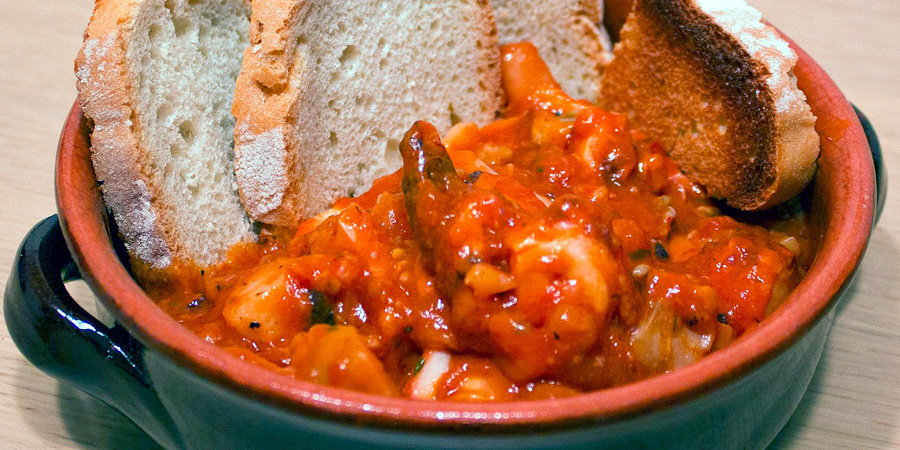
Cacciucco is a fish-based dish, properly typical of Viareggio and Livorno cuisine.
Pellegrino Artusi in the famous Science in the kitchen and the art of eating well of 1891 describes the two variants from Livorno and Viareggio in recipes 455 (Cacciucco I) and 456 (Cacciucco II). Regarding the former, Artusi notes that "as good as you like, it's always a very serious food and you have to be careful not to overeat it" while he writes of the second "learned in Viareggio, it is much less tasty than the previous one, but lighter and more digestible".
It is a fish soup made up of different types of fish, crustaceans and molluscs, generally octopuses, cuttlefish, cicadas, scorpion fish and other varieties of so-called poor fish, cooked at different times, depending on the different cooking times required according to the type of fish, in tomato sauce and then placed on slices of toasted bread and garlic placed on the bottom of the plate.
The traditional cacciucco recipe included thirteen fish species. However, it must be said that the species used in the vast majority of written testimonies are reduced to 6/7 types of fish, which can vary according to the catch of the day. There are therefore no precise rules on the fish composition of this dish, but rather the unequivocal choice, to obtain a good result, of all those fish defined as "for soup".
The Viareggio painters Lorenzo Viani and Cristoforo Mercati contributed at the end of the 1930s to the diffusion of this originally poor and popular dish to the general public, which also began to be served in the restaurants of Viareggio, a very fashionable tourist resort at the time.
Find Typical Products